ORB Trading Guide
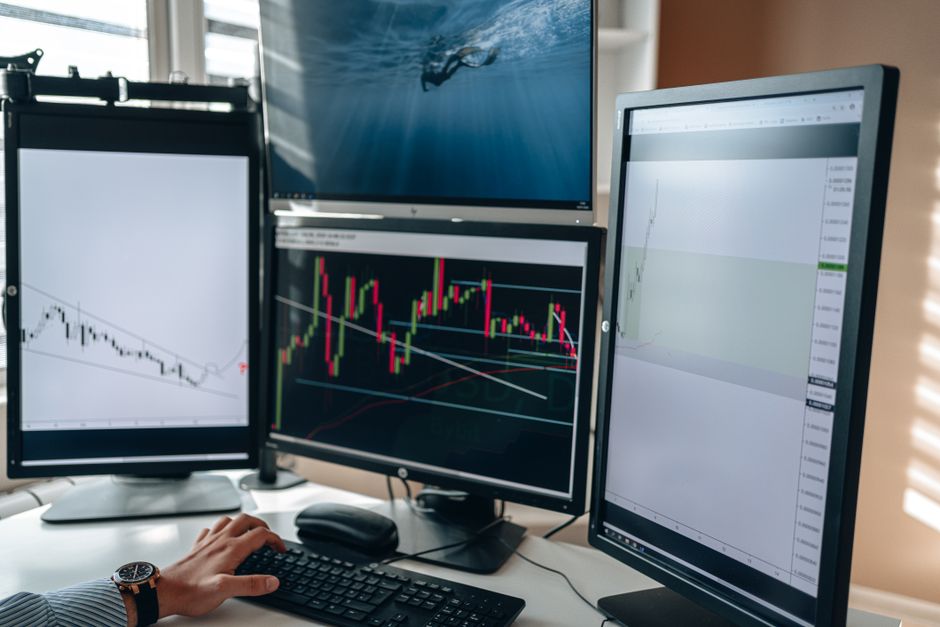
A narrative walkthrough of one full trading session built around an opening range breakout, following the day in order from the quiet preparation hour through the range period, the entry and the final bell.
A Session Has an Order to It
Written descriptions of a breakout method tend to collapse the whole day into a rule and a diagram. That leaves out the shape of the thing. A session runs in a sequence, each part sets up the next, and most of the decisions that determine how the day goes are made in stretches where nothing is happening on the chart. Following one session in order, from the hour before the open through to the final bell, shows where the effort actually goes and how little of it happens at the moment of entry.
The Preparation Is Not Optional Reading
Before anything trades there is a list of things that have already been settled or have not. Which instrument, what a normal range looks like on it, whether anything scheduled lands during the session, how much is being risked, and what would make the day a no trade day. Every one of those is easier to decide when nothing is moving. Left undecided, they get decided anyway, in the middle of a break, by whichever impulse is loudest at the time.
The Open Is Mostly Waiting
The range period is the strangest part of the session to sit through, because it is the part where the work consists of not acting. Price is moving, sometimes violently, and the only task is observation. Watching how the range forms, rather than staring at where the lines will eventually sit, is what makes the rest of the morning legible. The temptation to shorten the wait is the single most common way a plan gets abandoned before it has been tested at all.
The Middle of the Day Tests the Plan
Once a position exists the session changes character. There is less to decide and more to endure. A trade that works usually does so slowly enough that it can be talked out of, and a trade that fails often looks fine for a while first. What happens between entry and exit is largely a matter of whether the exits were defined earlier and whether they are being honoured now, which is why the middle of the day is a poor time to be inventing anything.
Walking a Session End to End
The articles here walk through a session as a narrative rather than a theory. One covers the whole arc from preparation to close, one stays with the hour before the open, and one deals with the final stretch of the day, which gets far less attention than it deserves. They are descriptions of how the time is spent rather than instructions, and the details of range construction, stop placement and instrument selection sit outside them.
Latest Guides
A Single Session Walked Through From Preparation to Close
2026-09-03
Descriptions of a breakout approach usually jump straight to the moment of the break, which is roughly the least interesting part of the day. What follows is one ordinary session described in sequence, with the dull stretches left in, because the dull stretches are where the day is actually decided and they are the part that never appears in a diagram.
Before Anything Trades

The first half hour of the morning goes on things that have nothing to do with charts. The instrument is already chosen and has been for weeks, which removes the most time consuming decision from the day. What remains is checking whether anything scheduled falls inside the session, glancing at how the instrument behaved overnight, and noting whether the previous few sessions have been unusually quiet or unusually wide.
That last check matters more than it looks. A sense of what normal is for this instrument this week is the reference every later judgement gets measured against, and it cannot be acquired at the moment it is needed. It has to be carried in from the days before.
The Range Period

The opening stretch is spent watching and writing nothing down until it ends. Price moves quickly at first, settles somewhat, then makes a second push that takes it to a new extreme with a few minutes left. By the end of the period the range is wider than it looked like being, and it formed in two distinct episodes rather than one.
The urge during this stretch is to act early, because the direction seems obvious well before the period closes. It is obvious in the sense that a coin that has come up heads twice seems to be a heads coin. Sitting through it is not passive. It is the active part of the morning, and the fact that it looks like inactivity is exactly what makes it difficult.
The Break
The range breaks upward a few minutes after the period ends. There is nothing to decide at this point, which is the whole purpose of having decided earlier. The entry level was defined by the range, the stop sits at the opposite edge, and the position size follows from the distance between them and the amount being risked. The arithmetic takes seconds because it was set up to.
What does require a moment is checking the range height against the reference formed earlier in the morning. If the range had come out unusually tall, the honest answer would have been to reduce size or skip, and that check has to happen here rather than after the position exists, when it stops being a check and becomes a rationalisation.
The Long Middle
The hours after entry are the least eventful and the most demanding. Price moves in the intended direction, stalls for a stretch long enough to feel like failure, drifts back partway toward the entry, and then resumes. None of that requires a decision, and the difficulty is entirely in not making one.
This is where a plan written in the morning either holds or quietly gets replaced. A stop that was defined at the opposite edge of the range is a long way off, and every hour it sits there it looks more like negligence and less like a plan. Moving it closer feels like risk management and is actually a change of strategy made mid trade, on the basis of discomfort rather than information.
The Close
The final stretch brings the one decision the morning did not settle, which is whether to exit on the target, on the clock, or on some judgement about how the move looks. On this session the target is not reached and the position is closed before the bell, because the strategy does not hold overnight and a position that must be closed is better closed with time in hand than at the last possible moment.
Afterwards the record takes a few minutes. Range height, how it formed, entry, exit, and one line on anything that felt difficult. The last item is the one most often skipped and the one that pays, because a session that felt wrong while being technically correct is the earliest signal that something about the plan is not survivable in practice. The day ends without any conclusion drawn from it, which is appropriate, because a single session is not evidence of anything.

The Decisions That Happen Before Nine Thirty
2026-09-03
The hour before the open has no drama in it and gets correspondingly little attention. It is also the only part of the day when every decision can be made calmly, with nothing at stake in the moment and no position exerting an opinion. Almost everything that goes wrong later can be traced to something that was left open during this hour and had to be settled under pressure instead.
Deciding Once, Not Daily

Some of the preparation is not really preparation for today. Which instrument gets traded, how long the range period runs, where the stop goes, how much is risked per trade, these are settled questions that should not be reopened each morning. Reopening them daily turns every session into a fresh design exercise and guarantees that no version of the plan ever accumulates enough history to be judged.
The morning work sits on top of those fixed choices. It is about establishing today's context rather than today's method, and keeping the two separate is what stops preparation from expanding to fill the whole hour with second guessing.
Establishing What Normal Looks Like
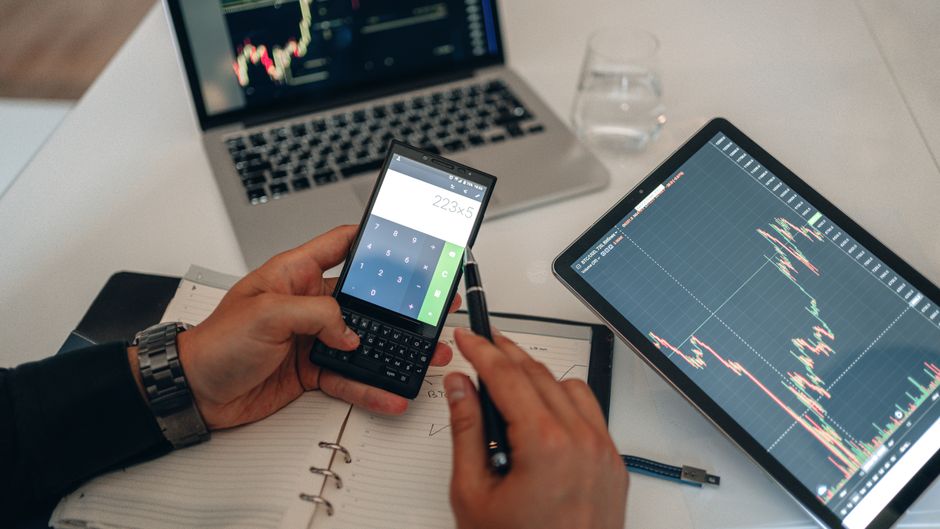
The most useful thing to arrive at the open with is a sense of the instrument's recent behaviour. How tall have the opening ranges been over the last few weeks, are the last few sessions wider or quieter than that, and did anything overnight move it substantially away from where it closed.
None of this needs to be precise. It needs to be present. The judgements made later in the morning are all comparative, and a comparison requires a reference. Without one, a range is just a number of points, and a number of points means nothing on its own. This is the single cheapest piece of preparation and the one most often skipped, because it produces no visible output.
The Calendar Check
Knowing whether a scheduled release lands during the session changes what the range is likely to represent. A range that forms around an announcement is measuring a repricing rather than an auction, and its edges are the extremes of a reaction rather than levels anyone defended. That is worth knowing before the range exists, not after it turns out unusually tall.
The check takes a minute and its value is mostly in the days it changes the plan, which are few. Preparation that only matters occasionally still has to be done routinely, because the occasions are not announced in advance and the whole point is to know beforehand.
Writing Down the Skip Conditions
The decision that benefits most from being made early is the decision not to trade. At nine o'clock it is easy to state that a range beyond some multiple of its recent typical height means no trade, or that a session with a major release inside it means reduced size. At the moment the condition binds, with the range in front of you and the day visibly moving, the same statement is very hard to make and slightly easier to talk around.
This is the reason skip conditions belong in writing rather than in intention. Written down, they are a rule being applied. Held in mind, they are a preference being weighed against an immediate opportunity, and preferences lose that argument reliably.
Knowing When Preparation Is Finished
There is a version of the morning hour that never ends. More charts, more instruments, more commentary, and by the open the mind is full of impressions that will interfere with a rule based decision rather than support it. Preparation has a natural stopping point, which is the moment the questions it was meant to answer have answers.
A short and repeatable routine beats a thorough and variable one, partly because it is sustainable across months and partly because a fixed routine produces comparable mornings. When something goes wrong it is possible to see what was different, which is impossible if the preparation itself was different every day. The hour before the open is not where an edge is found. It is where the conditions are set so that whatever edge exists is allowed to operate.

What the Last Thirty Minutes Are Actually For
2026-09-03
The end of a session gets treated as an afterthought, a stretch to be sat through until the position closes itself one way or another. It is a distinct part of the day with its own character, and for an approach that does not hold positions overnight it contains a decision that the morning deliberately left open.
The Deadline Nobody Planned For
A breakout taken in the morning has an exit at the target and an exit at the stop, and both were defined before the entry existed. There is a third exit that often was not, which is the one imposed by the clock. If the strategy is intraday then every open position has a hard closing time, and the trade that is neither stopped nor filled at target is the ordinary case rather than the exception.
Leaving that exit undefined means deciding it in the final minutes, which is the worst available time. There is a position with a known result attached to it, the session is ending, and whatever decision gets made will be made about that specific outcome rather than about a class of situations.
Time Stops Deserve a Rule

The cleanest version is a fixed time at which any remaining position is closed, chosen well before the bell so it is not competing with the closing auction for liquidity. It gives up whatever the last stretch might have offered and buys a decision that never has to be argued about.
A softer version closes at a fixed time only if the trade has not made meaningful progress, and otherwise lets it run to the bell. That has a defensible logic, and it also introduces a judgement about what counts as progress, which is exactly the kind of judgement that expands under pressure. Either rule is workable. Having neither is not.
The Closing Stretch Is Not a Second Session
Activity picks up near the end of the day and it can look like a new opportunity, particularly on a session where nothing worked. Taking a fresh trade in the last stretch is a different strategy from the one being run, tested on nothing, entered in a mood produced by the earlier part of the day.
The strong version of the point is that the day's trade was taken or it was not, and either way the day is over. A session where the range never broke is a complete session with a correct outcome, and the discomfort it produces is not evidence that something is missing. It is the ordinary feeling of having followed a rule that did not fire.
What the Record Should Hold
The few minutes after the position closes are the only time the session can be recorded accurately, because by tomorrow it will have blurred into an impression. What matters is the material that a later review can actually use, which is less than most people write and more specific.
The range height and how it formed, whether it was tall or ordinary against the recent reference, the entry and the exit and which of the three exits was used. Then one line on anything that was difficult, including trades that were correct but felt wrong, because those are the earliest sign that a rule works on paper and not in practice. What does not belong in the record is a conclusion. A single session supports no conclusions, and writing one down makes it harder to see the pattern later.
Stopping Properly
The last function of the closing stretch is ending the day. An approach built around a single decision made in the first hour has a shape, and the shape includes finishing. Continuing to watch after the position is closed produces observations that cannot be acted on and impressions that will contaminate tomorrow's preparation.
There is a practical version of this that is easy to overlook. Whatever needs to be carried into tomorrow morning belongs in the record now, not in memory. The reference for what a normal range looks like on this instrument is built one session at a time, and it only exists if each session is written down while it is still accurate.